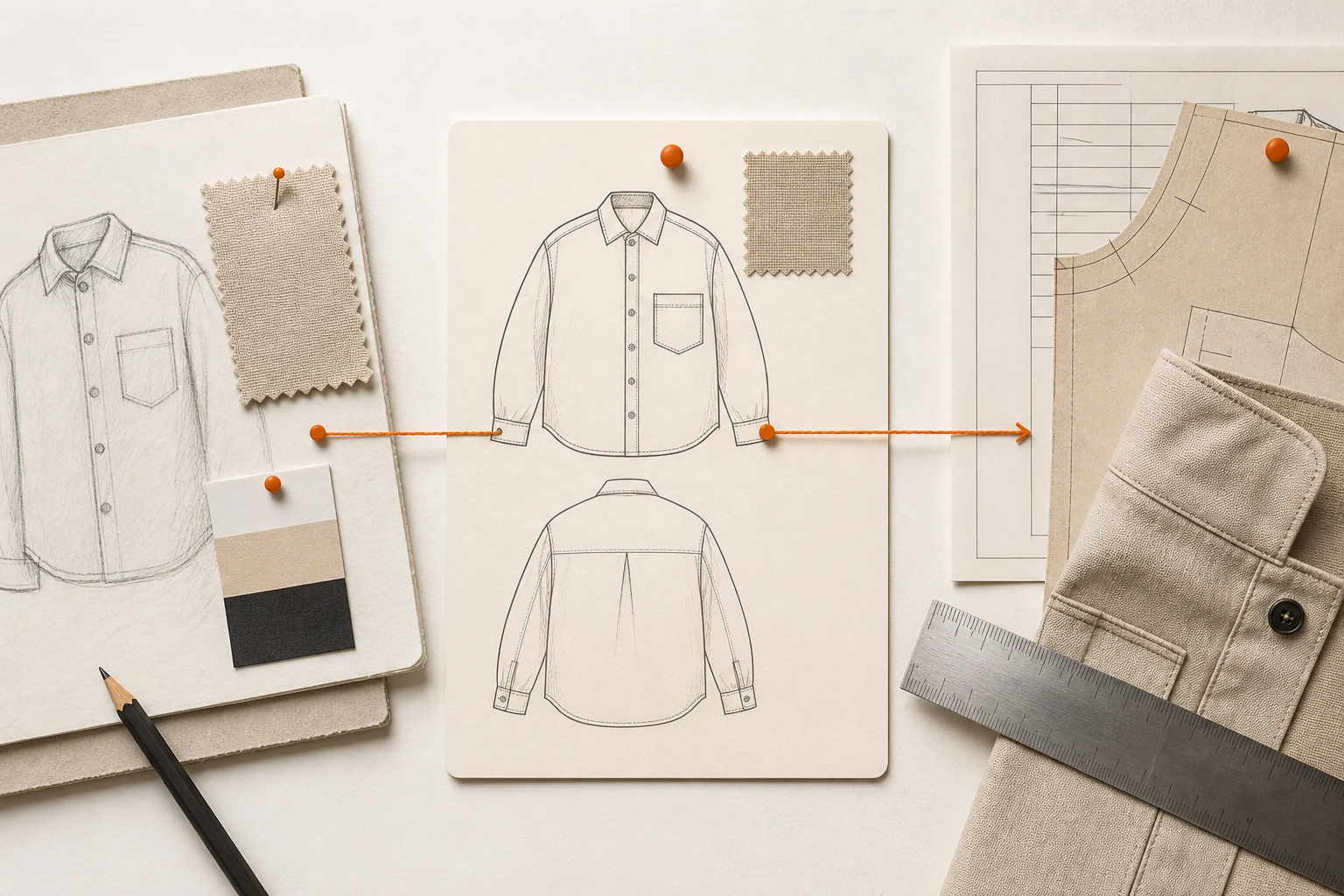

A development process is a sequence of decisions with owners and evidence, not a list of departments the product passes through.
Fashion products rarely move in a straight line. Materials change, samples expose fit issues and commercial targets move. A controlled process gives the team room to learn without losing the current product record.
Set the product brief and range role
Define customer, category, use, price, margin, launch, key attributes and the reason the product belongs in the range. Name the owner and unresolved assumptions.
Build the technical starting point
Create the product record, drawings, initial BOM, measurements, construction and colorways. Mark proposed and approved information so suppliers can see what is stable.
Select materials and suppliers with the product
Capability, minimums, lead times, testing and cost influence design. Keep those facts beside the product decision rather than waiting for a late sourcing handoff.
Use samples as controlled experiments
Name the purpose of each round, link it to the specification used and issue one consolidated decision. Update the record before requesting the next sample.
Protect cost and calendar gates
Review current cost, margin, material status and critical-path risk at named points. An approved design is not ready for bulk if the commercial or technical evidence is still open.
Release bulk with a complete history
Confirm the current specification, approved sample, materials, testing, cost, supplier, order information and remaining production controls. Keep later changes traceable.
The process works when another person can see what the product is, which decisions are approved, what remains open and who acts next.