

01
Planning4 min
Assortment Planning Software for Fashion Brands: Features and Buying Criteria
Compare fashion assortment planning software by option count, colorways, margin, readiness and its handoff into product development.
Read field guideTurn collection intent into owned action
Field guides for fashion development calendars, range planning, product costing, purchase decisions and delivery-risk management.
15 field guides · Updated Sep 25, 2026
A launch date, target margin and assortment plan only become operational when product decisions have owners and dependencies. These guides connect range architecture, critical-path timing, material and product cost, seasonal learning and the downstream work required to deliver a viable collection.
Use this guide to answer
Selected field notes
Compare fashion assortment planning software by option count, colorways, margin, readiness and its handoff into product development.
Read field guideUnderstand how financial planning, assortment planning and fashion product development software should share approved decisions.
Read field guideRun fashion product development through clear stage gates from range brief and specifications to samples, costing and bulk release.
Read field guideCompare retail product development software across range planning, product data, samples, suppliers, costing, calendars and delivery.
Read field guideUse visual line planning to judge range balance, color, option count, margin and readiness, then assign clear product actions.
Read field guideBuild and manage a fashion critical path around dependencies, decision dates, supplier work, risk and launch commitments.
Read field guideCompare fashion costing software by BOM linkage, supplier quotes, scenarios, currency, margin, approvals and change history.
Read field guideControl fashion purchase orders across product readiness, approvals, supplier issue, changes and the handoff between PLM and ERP.
Read field guideCompare fashion production tracking software by product readiness, purchase orders, milestones, exceptions, shipments and ownership.
Read field guide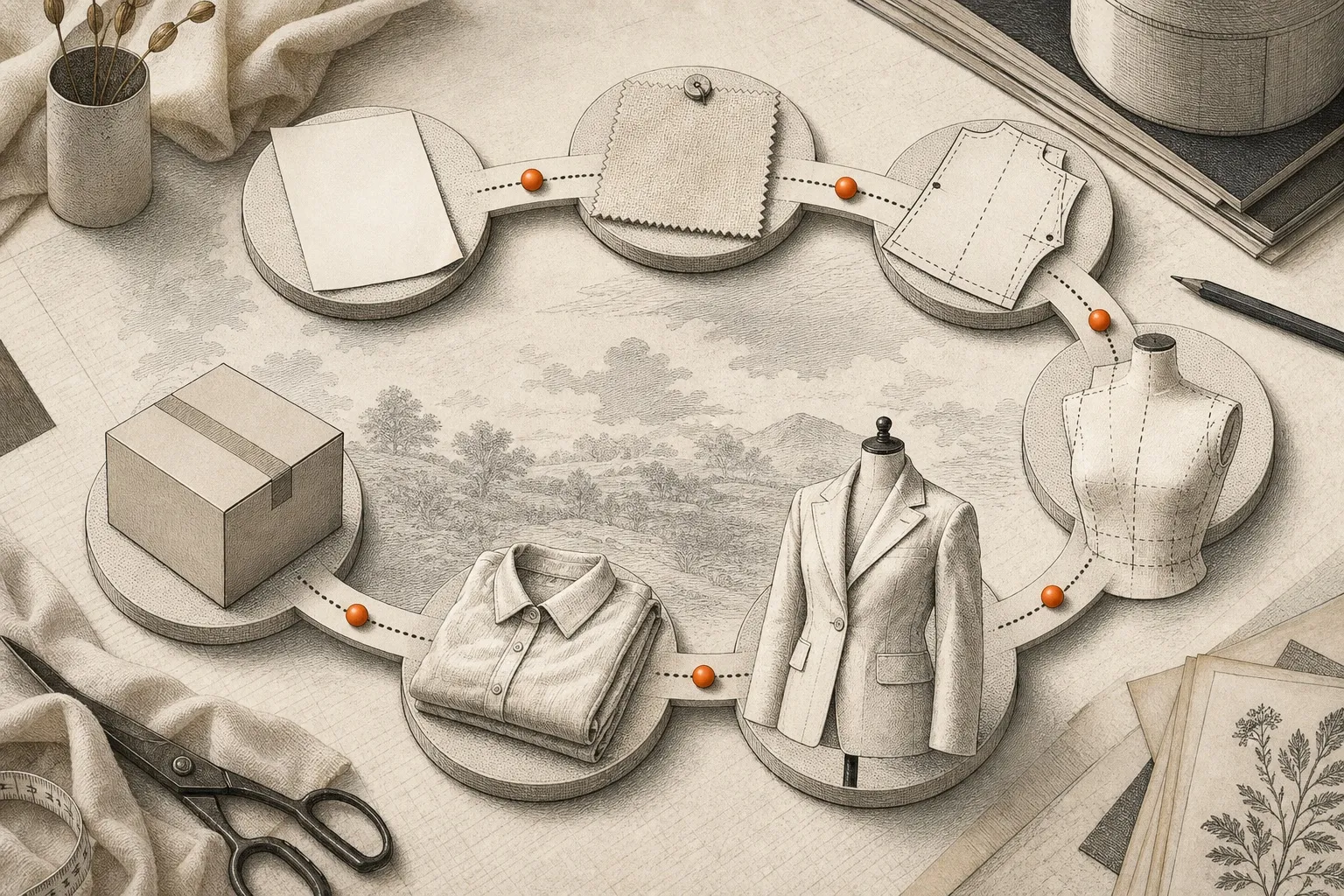
Plan a realistic apparel critical path by working backward from launch, protecting decision windows and making dependencies visible across teams.
Read field guide
A practical seasonal retrospective for fashion teams that turns sample, cost, supplier and timeline evidence into better decisions next time.
Read field guide
Mastering your BOM is vital for a profitable season. In Fashion PLM, small costing errors lead to big losses, but detailed scenarios help you navigate shifting prices and protect margins. Lifecycle PLM lets you build these data-driven models in seconds—stop guessing and start planning.
Read field guideLifecycle PLM solves costing errors by centralizing all product data, automating updates to the Bill of Materials (BOM), and integrating accurate cost checks early in the development process to prevent profit loss, rework, and costly delays. This unified approach ensures that design changes instantly reflect the true financial impact, keeping the entire product team and supply chain aligned.
Read field guide
To build a winning line, you must follow a clear path from big ideas to small details. Start with Collections to set your seasonal themes and total budgets. Next, break these down into Categories to ensure you have the right mix of items like tops and pants. Finally, focus on Products to manage specific fabrics, costs, and factory dates. Using Lifecycle PLM links these steps in one spot, which stops data errors and prevents overstocking. This structured flow helps your team work faster and keeps your profit margins safe every season.
Read field guide
Turn scattered swatches and duplicate trim records into a trusted material library that speeds development, costing, sourcing and compliance work.
Read field guide