

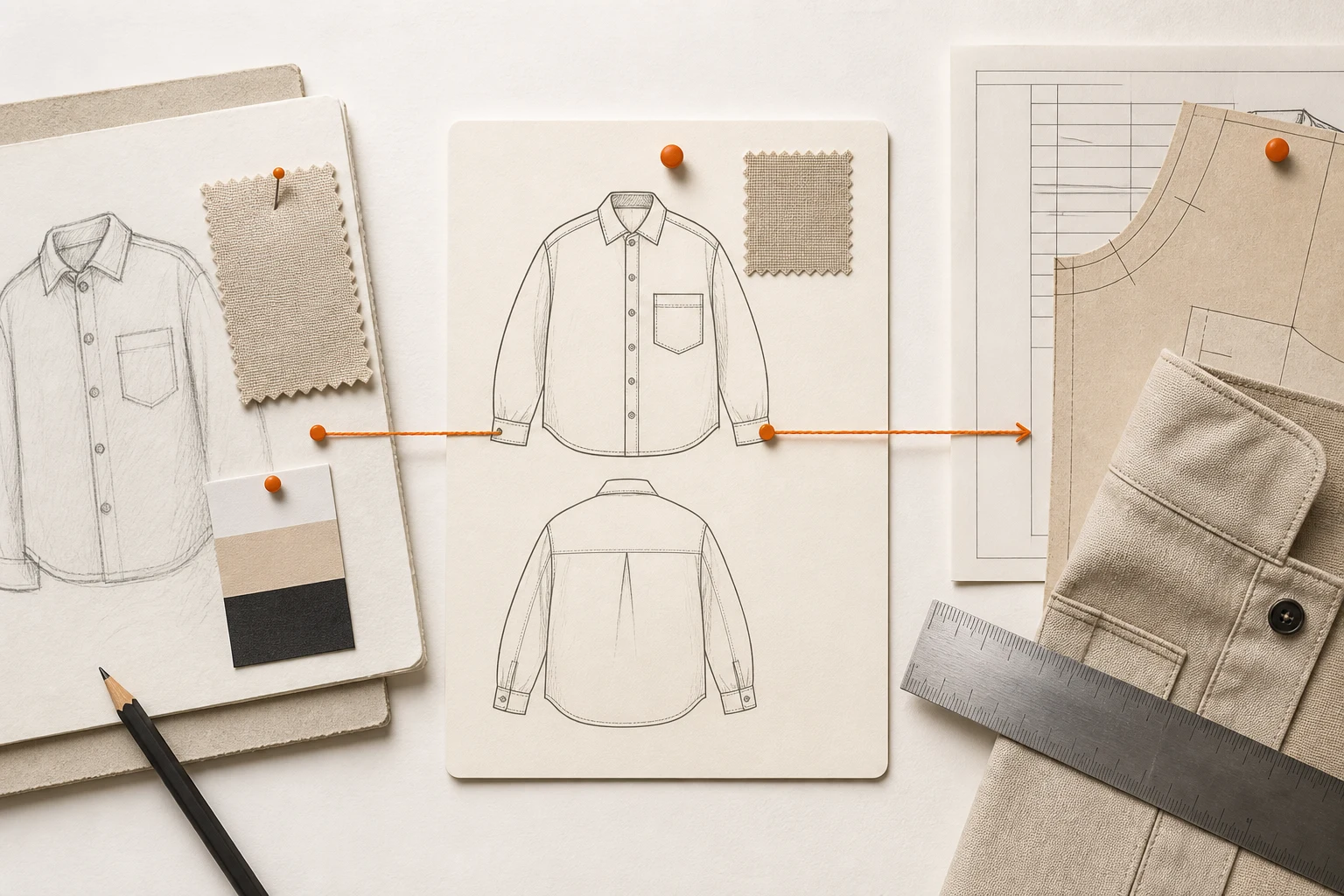
A handover is ready when production can act without reconstructing the designer's intent.
A folder full of final files can still make a poor handover. Production needs one current set of decisions: what is approved, what remains open and which revision controls the next step. When that information is split across chats, presentations and marked-up PDFs, the first job becomes reconciling the record.
A better handover does not need more paperwork. It needs less ambiguity. Design should be able to protect the product intent while production can see the specifications, constraints, ownership and status needed to move the style forward.
Agree what ready means
The handover point needs a shared readiness rule. It should not mean that design has finished a sketch. It should mean the product record is complete enough for production to take a named next action. The criteria can change by product type and stage. A washed outerwear style will not need the same evidence as a carryover jersey.
Build one controlled product record
One record does not have to mean one enormous document. It means that the current drawings, bill of materials, measurements, construction notes, sample decisions and approvals all point to the same style and revision.
- Use a stable style identifier and name the owner of the record.
- Keep current design views and colourways beside the technical information.
- Connect approved materials and trims to the relevant BOM lines.
- Attach measurement methods, tolerances and construction details where they apply.
- Record the latest sample decision and any fit comments that still affect production.
- Show current supplier, cost and milestone information when production needs it.
Do not ask production to read an entire message history to discover the final answer. Keep the discussion for context, but bring the approved decision into the current record.
Make the status of each decision visible
Content without status is hard to use. A fabric reference may be present but still awaiting approval. A measurement chart may be complete for one size and unfinished for the rest. Marking that difference prevents an open item from being treated as an instruction.
- Approved: production can use the information.
- Open: an answer is still required, with an owner and due date.
- Conditional: work may continue only under the stated condition.
- Superseded: keep it in the history, not in the current production view.
Use the handover meeting for exceptions
A useful handover is not a page-by-page reading of the tech pack. Spend the time on details that depart from the standard, decisions that are still open and anything production may interpret differently from design.
- 1Confirm the style, season and controlling revision.
- 2Review open decisions and any non-standard material, fit or construction detail.
- 3Check that every remaining action has an owner and a useful deadline.
- 4Record that production has accepted the handover and name the next milestone.
Design can explain intent where interpretation matters. Production can test whether the instruction is practical and flag missing information before the style moves further downstream.
Control changes after handover
Handover creates a controlled starting point, not a permanent freeze. Changes will still happen. After release, route each change through a named owner, issue a new revision and record what the change affects.
Avoid silent edits to an approved record. A material change may alter cost, testing, colour, supplier work or timing. The production team needs to know that the decision changed and which instructions are now current.
Give production a usable view
Design and production can work from the same product record without needing the same screen. A production view should put the approved BOM, measurements, construction, supplier, milestone and open actions within easy reach. It should hide old discussion unless someone needs the history.
The source stays shared. Only the emphasis changes. This keeps production focused without creating another copied file that can drift from the design record.
Run a final release check
- The style identifier, owner and revision are correct.
- Current design views and colourways are attached.
- BOM, measurements and construction details show their approval status.
- The latest sample decision is recorded against the product.
- Supplier, cost and milestone information is current where required.
- Every open decision has an owner and due date.
- Production has acknowledged the handover and knows the next action.
A production team should be able to answer five questions from the record: what are we making, which version controls, what is approved, what still needs a decision and who owns it? If any answer requires a search through email or chat, the handover is not finished.