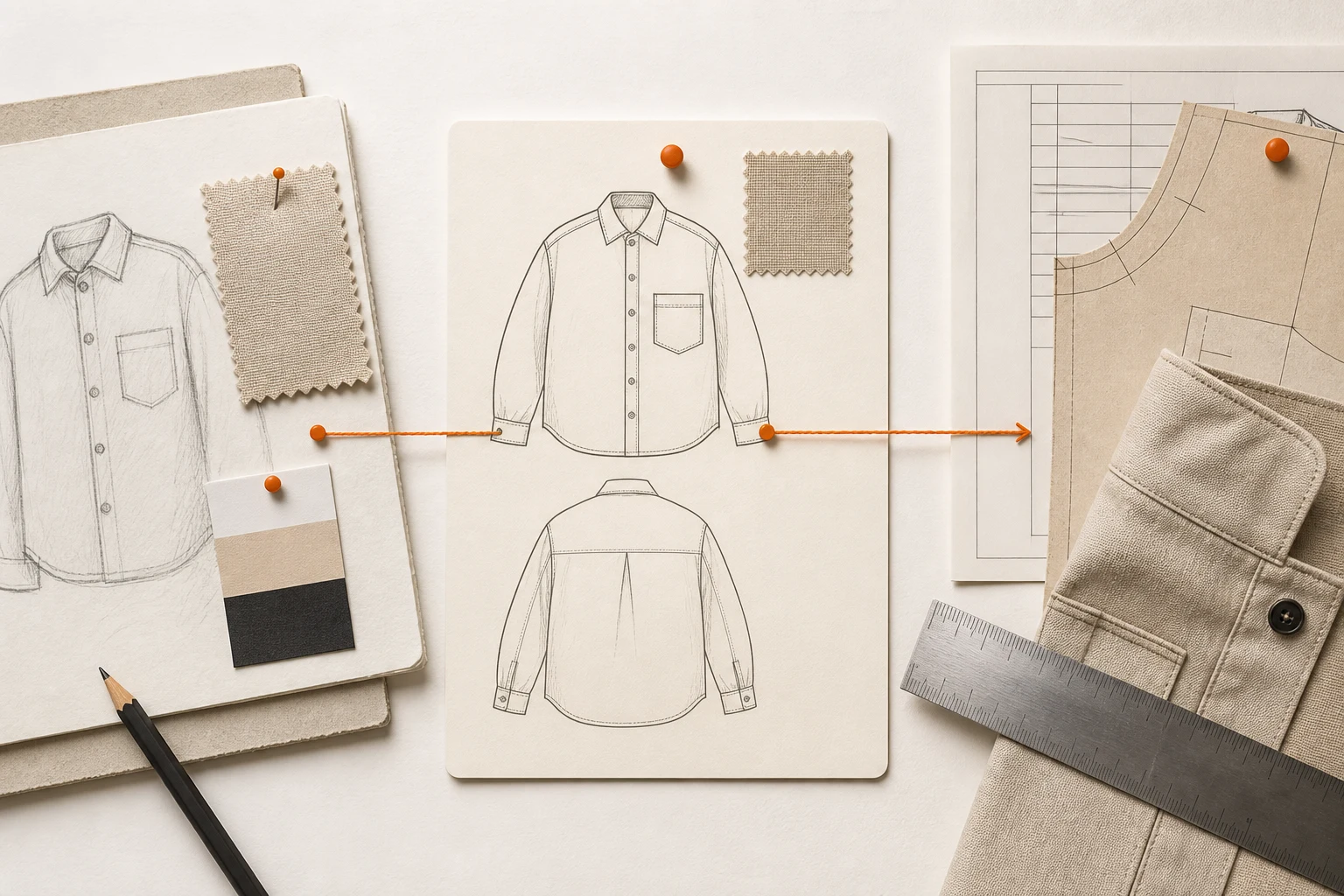

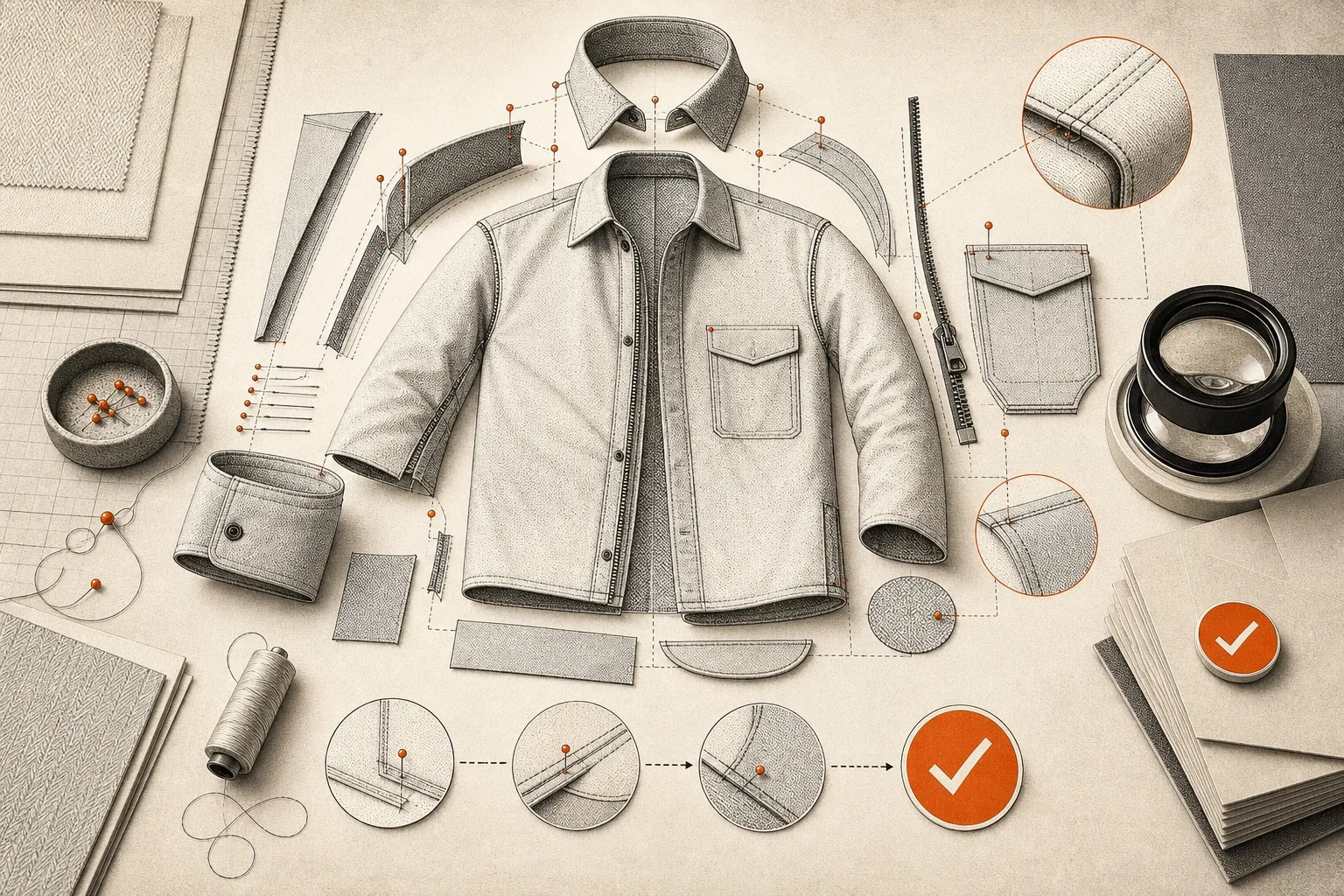
A sample review is not a meeting about a garment. It is a decision point in the product lifecycle.
The first sample arrives and everyone has an opinion. Design wants a cleaner line. Technical design sees a balance problem. Merchandising worries about price. Sourcing needs an answer before the factory's next production window. When those reactions live in separate messages, the supplier receives fragments instead of a decision.
A strong review process turns a physical sample into a controlled set of actions. The goal is not to collect the most comments. It is to decide what must change, who owns the answer and what evidence will prove the next sample is right.
Prepare the review before the sample arrives
Start with the reason this sample exists. A proto sample tests construction and proportion. A fit sample tests measurements and balance. A pre-production sample confirms the final combination of materials, workmanship and specifications. Reviewing every sample against every possible standard creates noise.
- Name the sample stage and the decisions it must unlock.
- Freeze the specification version the supplier used.
- Bring the approved sketch, BOM, color standard and prior comments into the same product record.
- Assign one review owner who will publish the final response.
Review in a sequence that separates facts from taste
Begin with objective checks: sample identity, material, color, measurements, construction and workmanship. Record actual measurements beside requested measurements rather than writing vague comments such as “too long.” Photograph the same views each round so changes are comparable.
Then move to judgment: silhouette, hand feel, styling and commercial intent. This order matters. A sleeve can look wrong because the armhole measurement is wrong, not because the design direction is wrong. Separating evidence from preference makes the final instruction easier to defend and execute.
Turn every comment into an executable instruction
Useful comments contain four parts: the location, the observed issue, the required change and the acceptance check. “Pocket feels off” leaves interpretation with the factory. “Raise the wearer's left chest pocket 12 mm; keep width and topstitch unchanged; confirm placement from high-point shoulder” is testable.
- 1Capture the issue against the correct image, measurement or component.
- 2Decide whether it is a correction, an intentional design change or an open question.
- 3Write one approved instruction and remove superseded discussion.
- 4Assign an owner and due date for any information still missing.
- 5Issue the consolidated review as a new controlled revision.
Resolve conflicts inside the brand, not at the factory
Suppliers should not have to choose between design, technical and merchandising comments. When feedback conflicts, the product owner resolves the trade-off before release. Keep the debate in the internal activity history, but expose one current decision in the supplier-facing package.
Classify late changes by impact. Aesthetic changes may affect pattern and sample timing. Material changes may affect minimums, testing and cost. Construction changes may affect machinery or labor. Seeing the consequence beside the request helps the team decide whether the improvement is worth the delay.
Close the loop before requesting the next sample
End with a short release check: all comments resolved, updated measurements approved, changed BOM items confirmed, annotated images attached and the next sample stage named. Ask the supplier to acknowledge the revision and flag feasibility questions before cutting.
Track first-pass approval rate, average rounds per style and time from sample receipt to consolidated response. These measures reveal whether the process is becoming clearer—not simply faster.