

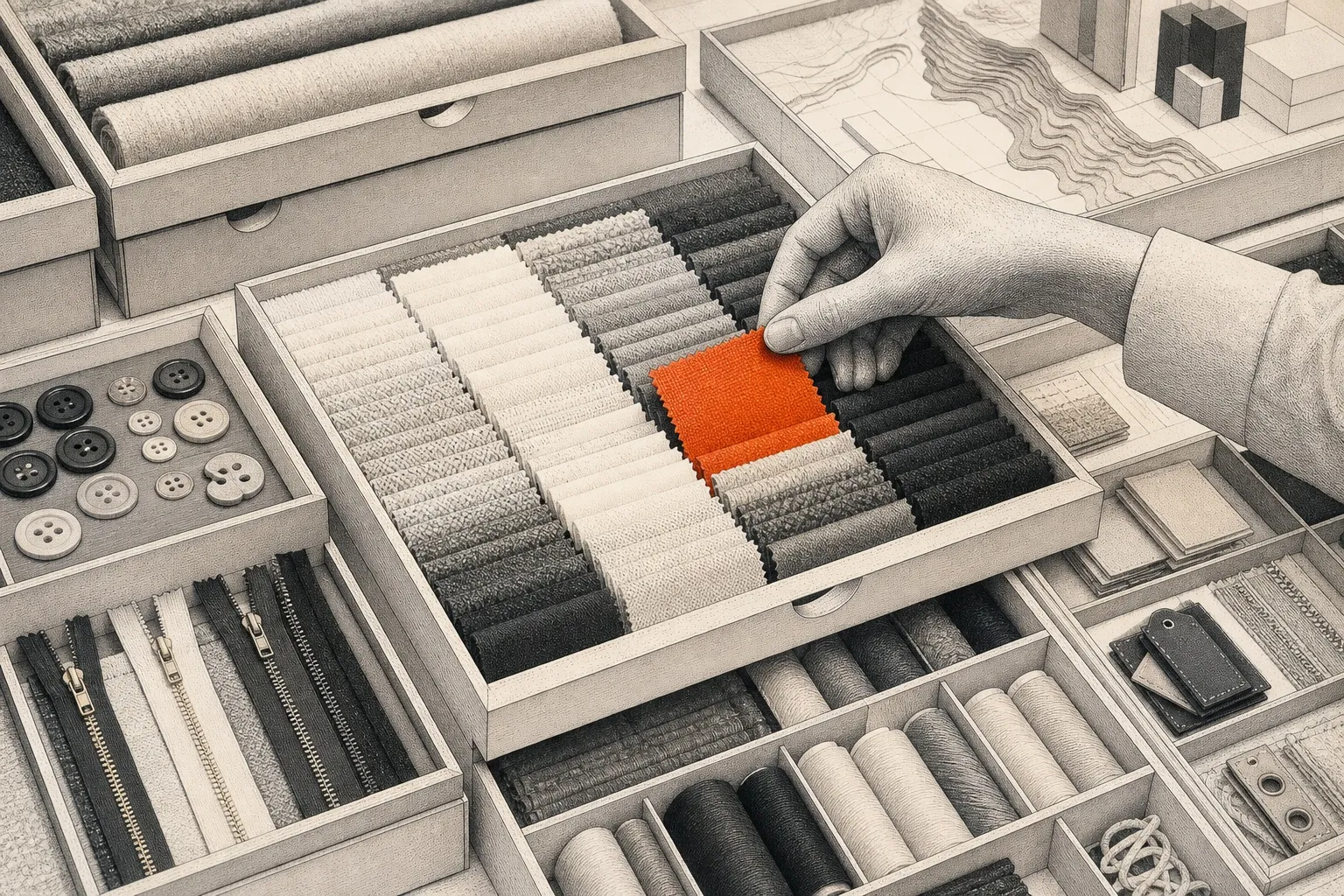
A material library creates leverage only when the physical swatch and the digital record describe the same thing.
Most brands already have a material library. It is just spread across shelves, inboxes, spreadsheets and people's memory. Designers reorder something that sourcing has already tested. Developers create near-duplicate records. Compliance documents become detached from the material used in a product.
The answer is not to capture every possible field. It is to create a small, trusted record that grows as a material moves from inspiration to approved use.
Choose the identity of a material
Give each material one internal code that survives supplier name changes and use it on the physical hanger or trim card. Separate the base material from colorways when color has its own minimums, test results or availability. Record the supplier's reference as a searchable attribute, not as your only identity.
Start with fields that support decisions
- Material type, construction, composition and usable width.
- Supplier and supplier reference.
- Color standard and development status.
- Price, currency, unit, minimum and lead time with an effective date.
- Testing, certification and compliance evidence with expiry where relevant.
- Approved products, seasons and known performance notes.
A price without a date, unit or quantity basis is not reusable data. A certification without scope cannot prove the material is covered. Design the record around the next decision someone must make.
Create a simple status model
- 1Exploring: interesting, but not commercially or technically checked.
- 2Developing: under color, quality, price or testing review.
- 3Approved: ready for defined product uses.
- 4Restricted: usable only under stated conditions.
- 5Archived: retained for history but hidden from new development.
Connect materials to products instead of copying them
A BOM should reference the shared material record, then add product-specific placement, consumption and color. When a current price or compliance document changes, teams can see every affected style without editing dozens of disconnected rows.
Govern the library lightly but consistently
Assign owners by material family. Review duplicates before creating new records. Set reminders for expiring evidence and stale prices. Archive records rather than deleting them so historical products remain understandable. Quarterly cleanup is useful, but quality is built during daily use.
Measure reuse rate, duplicate creation, time to source an approved option and the share of active materials with current commercial and compliance data. The best library makes the preferred path easier than starting again.