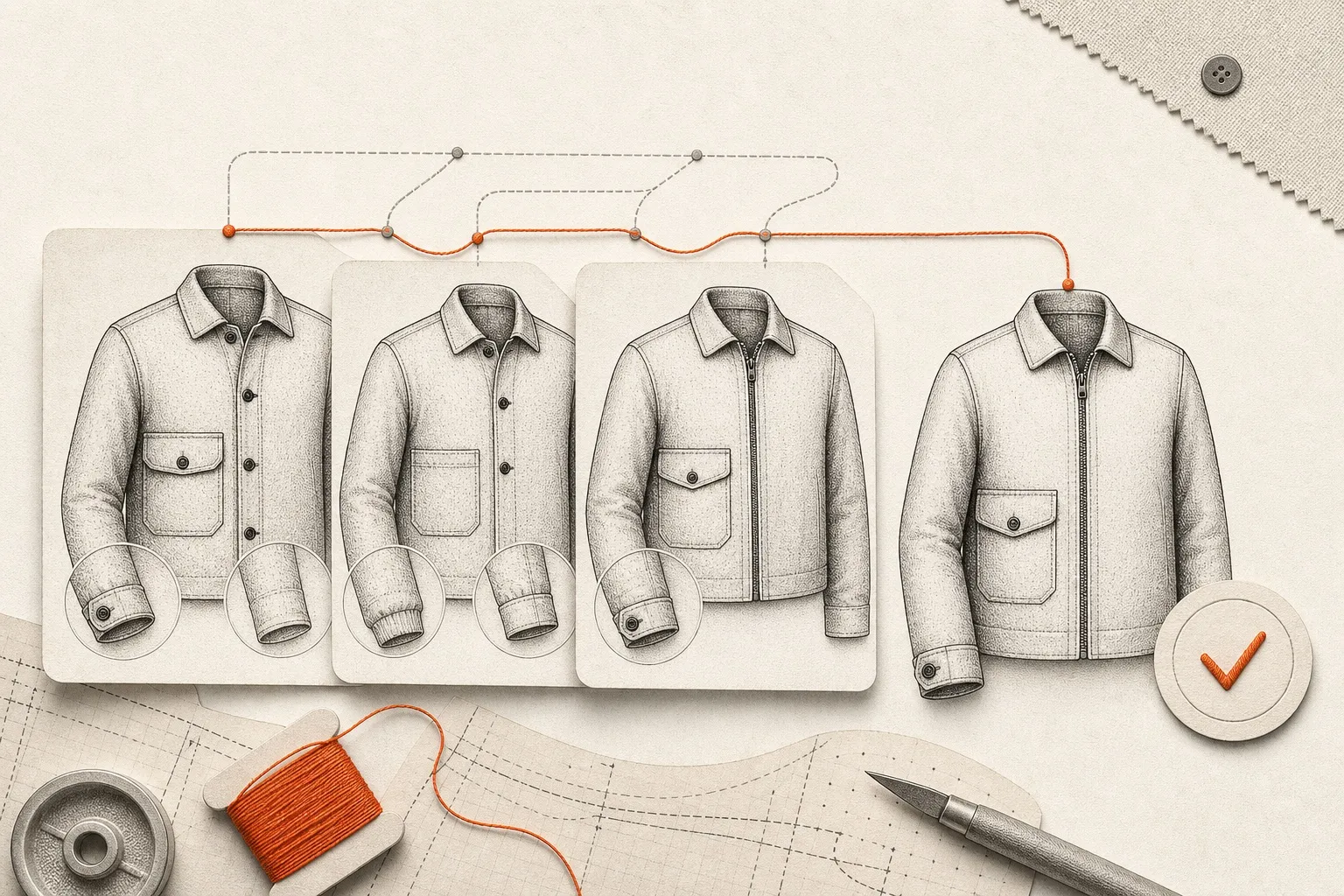

A hoodie combines several small systems. The pack has to explain the parts and the points where they meet.
Hood shape, neck opening, rib recovery, pocket placement and fabric weight all affect the finished product. When those decisions sit in separate drawings and messages, a supplier has to assemble the intent for the brand.
Set the material and silhouette together
A heavy loopback fabric behaves differently from a lighter brushed fleece. Record composition, construction, weight, finish and shrinkage assumptions beside the intended fit and reference block.
Give the hood its own technical detail
Show panel count, lining, opening finish, drawcord route, eyelet or buttonhole, overlap and attachment to the neckline. A side view or section often explains volume better than a front flat.
Control rib, pocket and seam interfaces
State rib quality and relaxed dimensions, pocket reinforcement, seam allowances where they matter and how bulky junctions should be finished. These interfaces often decide whether the garment looks clean.
Measure the whole balance
Chest and body length are not enough. Shoulder, sleeve, armhole, hood dimensions, pocket placement and rib depth can change the silhouette. Define each method and review related points together.
Treat artwork as construction input
Embroidery, applique and large prints affect handling and stability. Link the approved artwork, placement, technique and backing requirements to the correct colorway.
Carry fit comments into the next revision
Consolidate sample feedback, update every affected measurement or detail and issue one current release. The supplier should never have to combine the latest PDF with an older comment thread.
A strong hoodie pack makes the dependencies visible. That gives design room to protect the silhouette while production gets instructions it can test.