
Quality control is the system that makes acceptable product repeatable. Inspection is one part of it.
Teams often use quality control and inspection as if they mean the same thing. Inspection finds evidence at a point in time. Quality control also decides the standard, protects it through development and changes the process when results drift.
Define product-specific standards
Use approved materials, measurements, construction, appearance, function, testing and packaging. Generic workmanship language cannot replace decisions about the actual product.
Put quality gates into development
Review risk at material approval, sample stages, pre-production and bulk milestones. State what evidence is needed and who can approve an exception.
Keep measurement methods reproducible
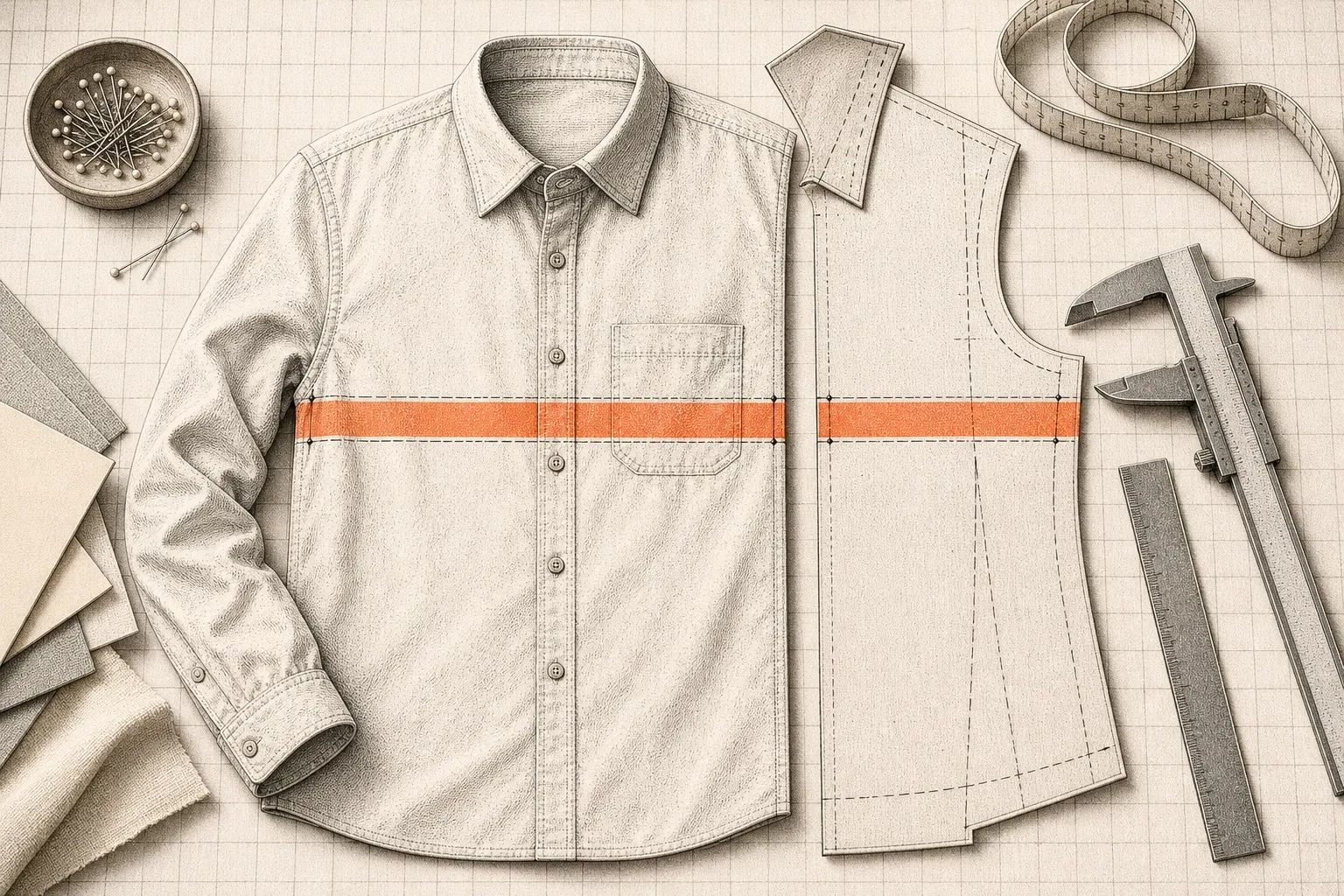
Name conditioning, layout, landmarks and technique. A tight tolerance is meaningless when two trained reviewers measure the garment differently.
Classify issues by consequence
Separate issues that affect safety, function, fit, appearance and commercial acceptance. The classification should guide escalation without hiding the product context.
Close corrective action
Record the immediate containment, root condition, permanent correction, owner and verification. A comment that says the factory will be careful next time does not change the process.
Review patterns across products and suppliers
Use recurring evidence to improve blocks, specifications, material choices and supplier allocation. Preserve the examples behind a trend so teams can judge whether it applies to the next product.
A quality system should help teams make the same sound decision across development and production, while keeping room for product-specific judgment.