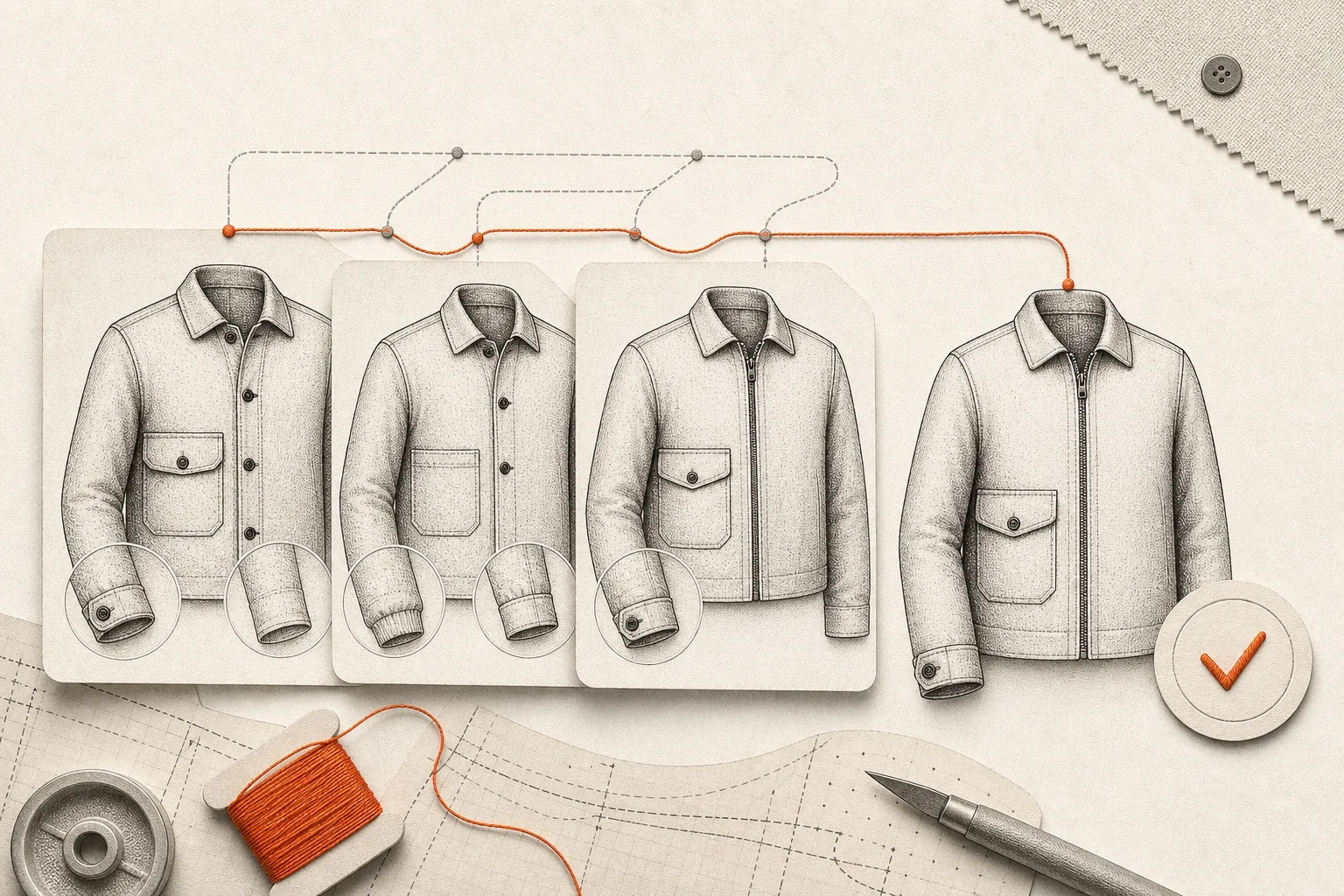

AI can draft product information quickly. It cannot decide whether an instruction is technically sound, commercially approved or safe to release.
An AI generator is useful when the blank page is the problem. It can organise supplied information, suggest missing fields and turn product context into a first draft. The risk begins when a fluent draft is mistaken for an approved specification.
Use AI for preparation
Good uses include drafting construction language from confirmed inputs, classifying materials, checking completeness and summarising changes. Each output should point back to the source information it used.
Keep technical decisions with qualified people
Measurement methods, tolerances, seam construction, test requirements and material suitability depend on the actual product. A technical designer must review what the model proposes.
Do not let generated text become a second record
Bring accepted output into the current product record. Avoid keeping a chat response, exported document and structured tech pack as competing versions.
Set approval boundaries
Separate suggested, reviewed and released information. Suppliers should see approved instructions, not an AI draft that happens to look complete.
- Name the source used for the suggestion
- Show who reviewed the output
- Record changes after review
- Require approval before supplier release
Test the failure cases
Try incomplete inputs, conflicting measurements and a late material change. A useful system should expose uncertainty instead of smoothing it into confident prose.
AI is most useful inside a controlled workflow. It should remove preparation work while leaving ownership, evidence and release decisions visible.