
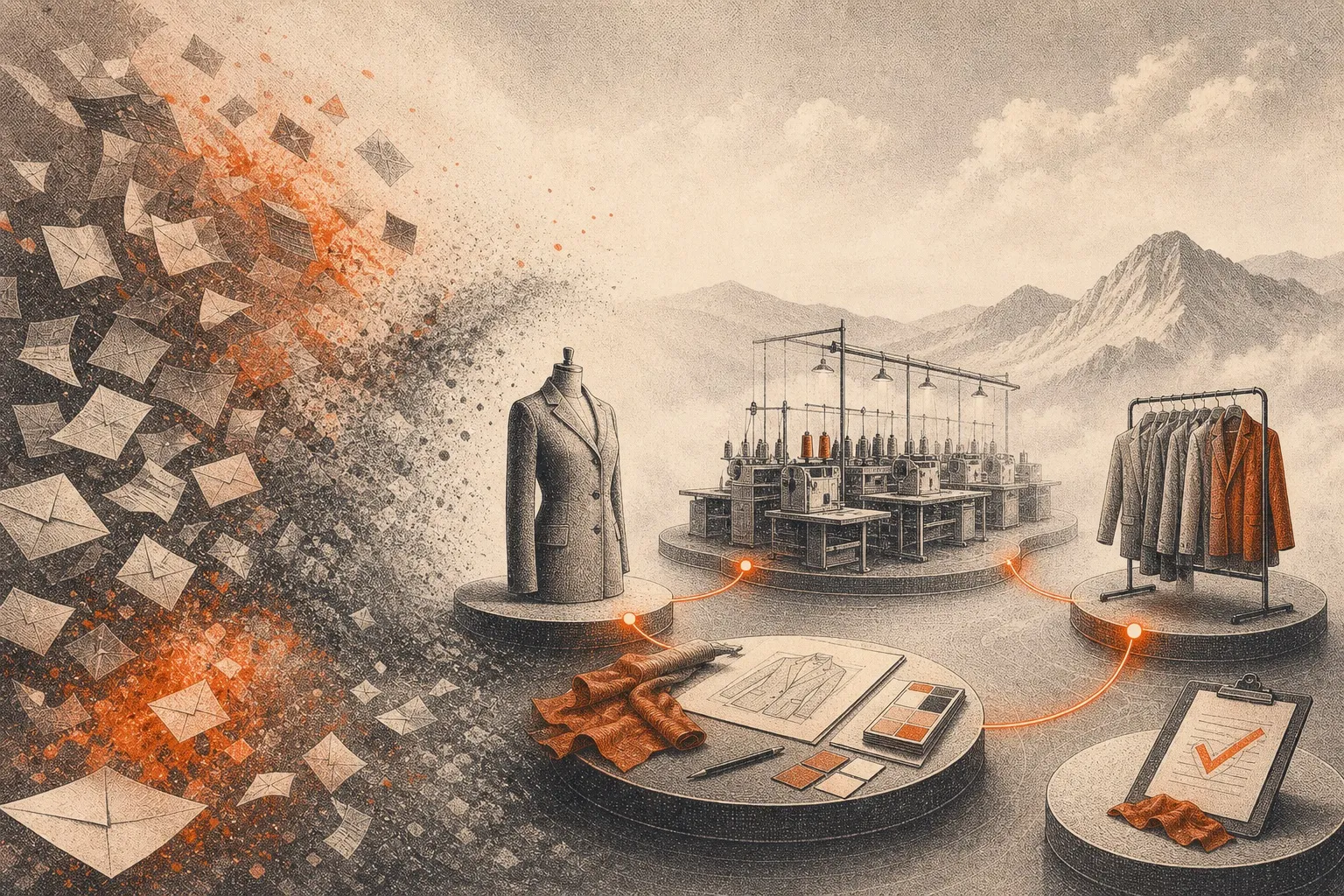
In the old way of making clothes, the "Black Box" was a major problem. Production was often a source of deep worry. A Product Manager in New York or London would hit "send" on a Tech Pack email. Then, they would enter a long period of silence. Status updates were manual. Spreadsheets were sent back and forth. "Where is my sample?" became the most expensive question in the supply chain.
By 2026, the global fashion industry has officially outgrown the inbox. Brands face more pressure than ever. They need clear data, fast speed, and proof of fair work. Because of this, **supplier collaboration software** is now a key bridge between a design idea and a finished garment. Lifecycle PLM provides this bridge to keep brands and factories on the same page.
Ending the Silo Culture in Global Sourcing
For many years, fashion brands and their suppliers worked in silos. This means they worked apart from each other. Communication was slow and broken. It was prone to "translation lag." Imagine a designer changing a button in the middle of a project. That news often took days to reach the factory floor. By the time the news arrived, the factory might have already bought the wrong buttons.
A Cloud-Based Vendor Portal from Lifecycle PLM fixes this. It replaces broken talk with a circular, live system. It is a web platform where everyone logs in. The material supplier in India and the quality checker in Vietnam see the same facts. It is the single "Source of Truth" for the whole team.
Why the "Black Box" Fails Modern Brands
The old way of working relies on trust without proof. When you send an email, you lose sight of the product. You do not know if the fabric is cut. You do not know if the sewing has started. You only find out about delays when it is too late to fix them. This lack of sight leads to air-freight costs and missed launch dates.
In a world where trends move in weeks, you cannot wait days for an email reply. The "Black Box" creates waste. It creates stress for the team. Most of all, it hurts your profit. A vendor portal opens that box. It lets you see every step as it happens.
Key Features of a Modern Vendor Portal
A high-performing portal is more than just a place to share files. It is an active tool. It is built for the hard work of making clothes. Lifecycle PLM offers features that target the biggest pain points in the industry.
The "Critical Path" is the heartbeat of any fashion line. It is the list of dates that must be met. A cloud portal makes this timeline digital. Instead of a dusty Excel sheet, the portal shows a live dashboard. When a factory finishes a fit sample, they "check it off" in the portal. This sends an alert to the brand manager right away. You no longer need to send "status update" emails. You can focus only on the tasks that are running late.
Asking for prices from many vendors used to be a nightmare. It took hours of data entry. Modern portals allow managers to send a "Request for Quote" to many vendors at once. Vendors put their costs directly into the system. This allows the brand to compare costs and lead times side-by-side. The system makes a comparison table for you. This helps you pick the best partner for every job.
Gone are the days of paper reports that arrive weeks late. Using mobile apps, factory teams can upload photos of defects in real-time. If a seam is crooked or a color is off, you see it instantly. Brands can approve or reject a shipment from their desk. This stops "surprise" quality issues from reaching your warehouse. It saves time and prevents unhappy customers.
Laws are changing fast. Brands must now prove where their goods come from. They must show that their factories are safe and green. Vendor portals act as a secure vault for these papers. This ensures your supply chain is always ready for an audit.
The Advantage of Total Transparency
For brands with teams all over the map, a cloud portal is the great equalizer. It solves the "Time Zone Tax." This is the 12-hour delay that happens when one team sleeps while the other works.
- 24/7 Access: A factory in China can upload a photo while the team in Los Angeles is asleep. When the LA team wakes up, the data is there. They can approve it and keep the work moving.
- Clear Data: Portals use standard numbers and icons. This stops mistakes caused by language gaps. A "Red 03" is the same in every language. This reduces the risk of making the wrong item.
Saving Time and Money
When you use a portal, you cut out "busy work." Your team spends less time looking for files. They spend more time on design and sales. You also save money on samples. By catching errors early via digital photos, you avoid shipping bad samples back and forth.
Think about the cost of one missed deadline. If a shipment is late, you might have to pay for a plane to move it. Or, you might have to mark down the price because the season is over. A portal helps you avoid these costs. It gives you the data to make fast, smart choices.
The Power of a Linked System
A Vendor Portal is best when it is part of a Product Lifecycle Management (PLM) system. While the PLM handles the creative side, the portal talks to the people making the clothes.
The benefits of this link are huge. It ensures vendors always have the newest Tech Packs. They see the 3D samples without manual uploads. This "Glass Pipeline" gives you total sight. You get higher quality and lower costs. You can react faster to what customers want.
Better Relationships with Factories
Some think a portal is just for the brand. That is not true. It helps factories too. When a factory has clear data, they make fewer mistakes. They don't have to wait days for an answer from the brand. They can plan their work better.
A portal builds trust. When everyone sees the same data, there are fewer fights. You become a "Customer of Choice" for the best factories. They want to work with brands that make the job easy. Lifecycle PLM helps you build these strong bonds.
Why Choose Lifecycle PLM?
Not all portals are the same. Some are hard to use. Others do not have the right features for fashion. Lifecycle PLM is built specifically for this industry. We understand the "Critical Path." We know how hard it is to track hundreds of styles.
Our system is easy to learn. Your vendors will actually use it. We focus on making the data clear and the tasks simple. In 2026, you cannot afford to work in the dark. You need a partner that brings light to your supply chain.
Get Started Today
The fashion world is moving faster every day. Do not let the "Black Box" hold your brand back. It is time to move past emails and messy sheets. Switch to a system that grows with you. See how Lifecycle PLM can change the way you work with your vendors.
Stop the endless "Where is my sample?" emails today. Join the brands that use data to win. We are ready to show you how our tool works. Reach out to our team to see it in action. Click HERE to schedule a quick demo of the Lifecycle PLM Vendor Portal to see how it can help your brand.
Conclusion
Traditional garment making does not have to be a guessing game. By opening the "Black Box" with Lifecycle PLM, your brand gains total control over every stitch and seam. You can stop chasing status updates and start focusing on great design. A cloud-based portal turns your supply chain into a clear, open pipeline. This means fewer mistakes, lower costs, and products that reach the store on time. In the fast world of 2026, the brands that win are the ones with the best data. Digital tools make your team faster and your factory partners happier. It is time to leave the messy emails behind and embrace a smarter way to work.