


ERP stands for enterprise resource planning. For a fashion brand, it usually brings together orders, inventory, purchasing and financial records. If you sell a hoodie in two colours and six sizes, the system needs to track the right stock and transactions for each combination.
This guide covers BlueCherry, NetSuite, A2000 (now Ai2000), Infor CloudSuite Fashion and ApparelMagic. Lifecycle publishes it as a fashion PLM provider. The product summaries use the vendors’ own information; the numbers identify the five options and are not a tested ranking.
What should fashion ERP handle?
- Style, colour and size: distinguish the garment design from each sellable variation. A SKU is the identifier for a particular stock item, such as the black hoodie in size M.
- Orders and stock: show what a customer ordered, what is available and what is already reserved for another order.
- Purchasing and receipts: record what you ordered from a supplier and what has arrived, including partial deliveries.
- Finance: connect the order and stock movements with invoices and accounting records.
- Wholesale requirements: where relevant, exchange documents with retailers through EDI, meaning electronic data interchange.
For example, a retailer orders 200 hoodies but only 150 are available. Ask how the ERP reserves the 150, records the remaining 50 and handles invoicing for a partial delivery. This is a clearer test than asking whether it “supports inventory”.
1. BlueCherry ERP

BlueCherry offers a fashion and lifestyle software suite covering ERP alongside PLM, EDI, shop-floor control and B2B ecommerce. It belongs on the shortlist when you want to evaluate several of those operations together.
Ask to enter quantities for each size and colour, reserve the available stock, ship the order and create the invoice. If you also run a factory, ask how shop-floor work is tracked. The quote should list the included modules, meaning the separately packaged parts of the software, and their implementation costs.
2. NetSuite for fashion

NetSuite combines financial, inventory and order-management capabilities within its retail ERP offering. Evaluate it when finance and retail operations need a shared system, then test the apparel details rather than assuming the industry label covers your process.
Bring a style with several colours and sizes, a partial delivery and a return. Ask the implementation partner to show variant setup, stock availability and the accounting result. Identify any extensions required for your wholesale or development workflow, and who will support them.
3. A2000 Software

A2000, now branded Ai2000, describes an apparel ERP for mid-market brands, wholesalers and distributors, with style-colour-size data, EDI, inventory, warehouse and financial functions. It is worth evaluating when fashion wholesale and retailer requirements shape your operations.
If a retailer requires EDI, ask the vendor to show how that retailer’s order enters the system and how shipment and invoice documents are returned. Confirm the setup and charges for each trading partner, meaning each company you exchange those documents with. General EDI support does not confirm that your particular retailer is configured.
4. Infor CloudSuite Fashion

Infor CloudSuite Fashion is an industry suite for fashion operations. Include it when you need to examine a wider design-to-distribution scope and have the team to assess the implementation across departments.
Ask which applications are included in the proposal and which team will use each one. For example, identify where designers approve the hoodie specification and where operations records the finished stock. If you sell through several companies or countries, ask to see the currencies and accounting entities you actually use.
5. ApparelMagic

ApparelMagic describes a fashion business platform covering inventory, sales, purchasing, production, accounting and PLM. Evaluate it if you want to compare a combined apparel operations system with separate specialist tools.
Have both the operations lead and a product developer use the demo. Test an order and inventory scenario, then test a measurement revision and factory response. A system can suit the commercial side of a brand while still needing a separate evaluation for technical development.
Compare providers with the same order example
- 1Create one style with your real size range and colourways. Check how each sellable SKU is identified.
- 2Receive only part of a purchase order. Show what is available to sell, reserved for customers and still due from the supplier.
- 3Process a wholesale order and an ecommerce order against that stock.
- 4Handle a return or cancellation and explain the effect on inventory and accounts.
- 5Export the records your team needs and show how the team is notified if a connected system cannot accept a product or order update.
Also price the work around the licence: implementation, data migration, trading-partner setup, warehouse connections, training and ongoing support. Ask for a named owner for failures between systems.
What does AI change in an ERP comparison?
Ask each provider to show a specific task: finding an order, explaining a stock discrepancy or preparing an update. Check whether its assistant only answers questions or can make changes, what approval is required and which subscription includes it. Do not assume a general AI claim covers your daily order work.
AI in product development serves a different purpose. Lifecycle can help create garment specifications, generate measurement drafts and update product records. Those capabilities do not replace accounting or warehouse requirements, so evaluate them in the system responsible for that work.
Where fashion PLM fits beside ERP
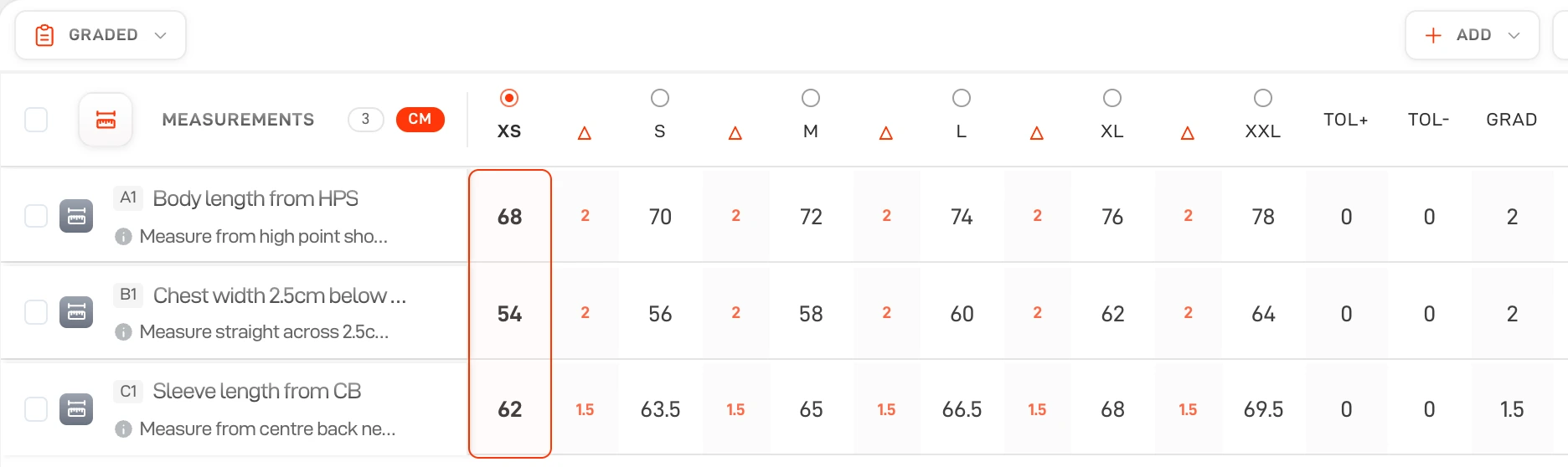
If your immediate problem is a wrong measurement in a tech pack or a sample decision lost in email, start by testing product development. ERP inventory and accounting will not, by themselves, settle which specification the factory should follow. Some ERP suites include PLM, so test that capability rather than assuming you need another system.
Lifecycle manages product specifications, materials, samples, supplier work and development planning. Our PLM versus ERP guide explains how to agree ownership for shared records. The production-tracking guide covers the transition from product readiness to orders and shipments.
For an integration discussion, bring the fields you need to transfer, the direction of each transfer and the approval point. A logo does not establish a ready-made connector or complete data coverage. Review the Lifecycle integration scope with the team for your particular system.
Who should take part in the ERP decision?
Have finance check the invoice and accounting results, operations check stock and orders, and product development check the garment specification and samples. Keep a record of the gaps and configuration work. That gives you a more useful decision than a ranking that ignores your team’s requirements.