

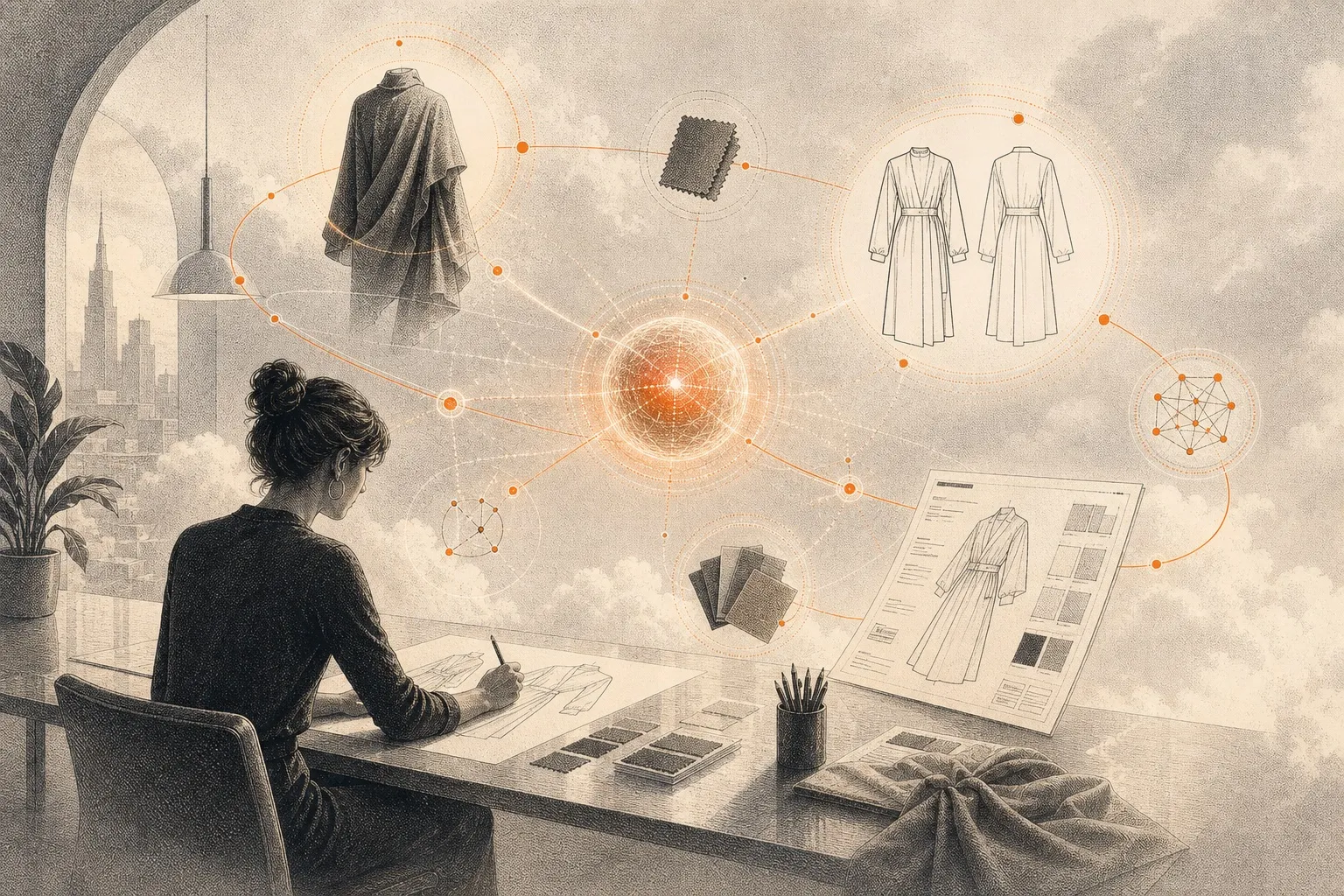
"AI is changing how fashion brands build products: faster, more accurate, and with far less manual work."
Tech packs are the backbone of garment production. They carry every detail a factory needs, including measurements, materials, stitching specs, trims, and more. A single error can cause costly delays or rejected samples. For years, creating them meant hours of manual work across spreadsheets, PDFs, and email threads.
That's starting to change fast.
AI is rewriting the tech pack process
AI tools can now read design files, pull out product details, and generate structured tech pack content in seconds. What used to take a technical designer a full day can now take minutes. The accuracy is higher, too. AI doesn't skip fields or misread measurements from an image.
This matters most at speed. Fashion brands are under pressure to shorten their production timelines. When tech packs are slow to build, everything else backs up: vendor approvals, sample requests, production slots. AI removes that bottleneck at the source.
Less room for human error
Most tech pack mistakes aren't caused by careless people. They come from repetitive manual work. Copying a color code, transcribing a measurement, labeling a trim detail are all tasks where small errors sneak in.
AI handles repetition well. It reads the same type of input consistently. It applies the same labeling logic every time. That consistency means less rework, fewer sample rejections, and less back-and-forth with factories.
What this means for brands in 2026
Brands that adopt AI in their product development workflows will move faster. They'll get samples right the first time more often. They'll free up their technical teams to focus on fit, quality, and vendor relationships instead of data entry.
Brands that don't adopt it will feel the gap. Their competitors will sample faster, iterate faster, and get to market sooner. In a category where timing shapes sales, that difference adds up.
The shift isn't just about speed. AI also creates better records. Every annotation, every spec, every material detail is captured and stored consistently. That makes audits easier, onboarding faster, and quality control more reliable across seasons.
AI-powered annotations are already here
Lifecycle PLM's auto annotation feature is a live example of this shift in action. When a designer uploads a tech sketch, the tool uses AI to automatically identify and annotate garment components: seams, trims, labels, hardware, and more. It reads the image and maps each detail to the right field in the tech pack. No manual labeling. No guesswork. The annotations are accurate, consistent, and ready for the production team within seconds. This is what AI-driven tech pack creation looks like in practice. Not a future concept, but a working tool available now.
Curious how auto annotation works inside a real tech pack workflow? We'd love to show you.
See Lifecycle PLM's auto annotation feature live. Watch how it reads a sketch, identifies garment details, and builds a structured tech pack in real time. Click HERE to book a demo.
Conclusion
AI is not a future concept in fashion. It is already changing how brands build products, manage specs, and work with factories. The brands moving fastest in 2026 are the ones cutting manual work out of their tech pack process and letting AI handle the repetition. The question is no longer whether AI belongs in product development. It is how soon your team adopts it. Tools like Lifecycle PLM's auto annotation are ready to use today. The sooner you start, the sooner your team gets time back to focus on what matters most: making great products.